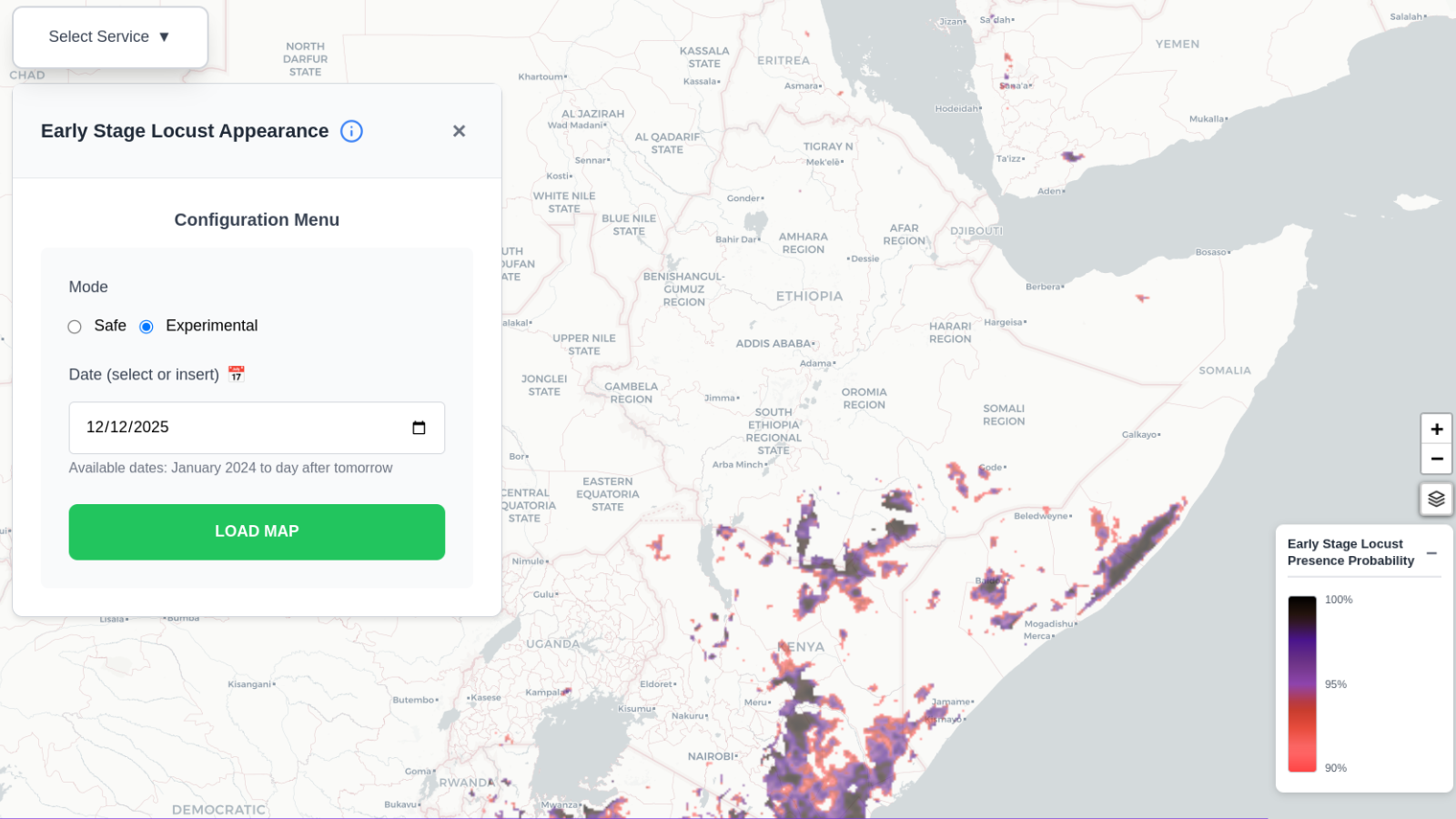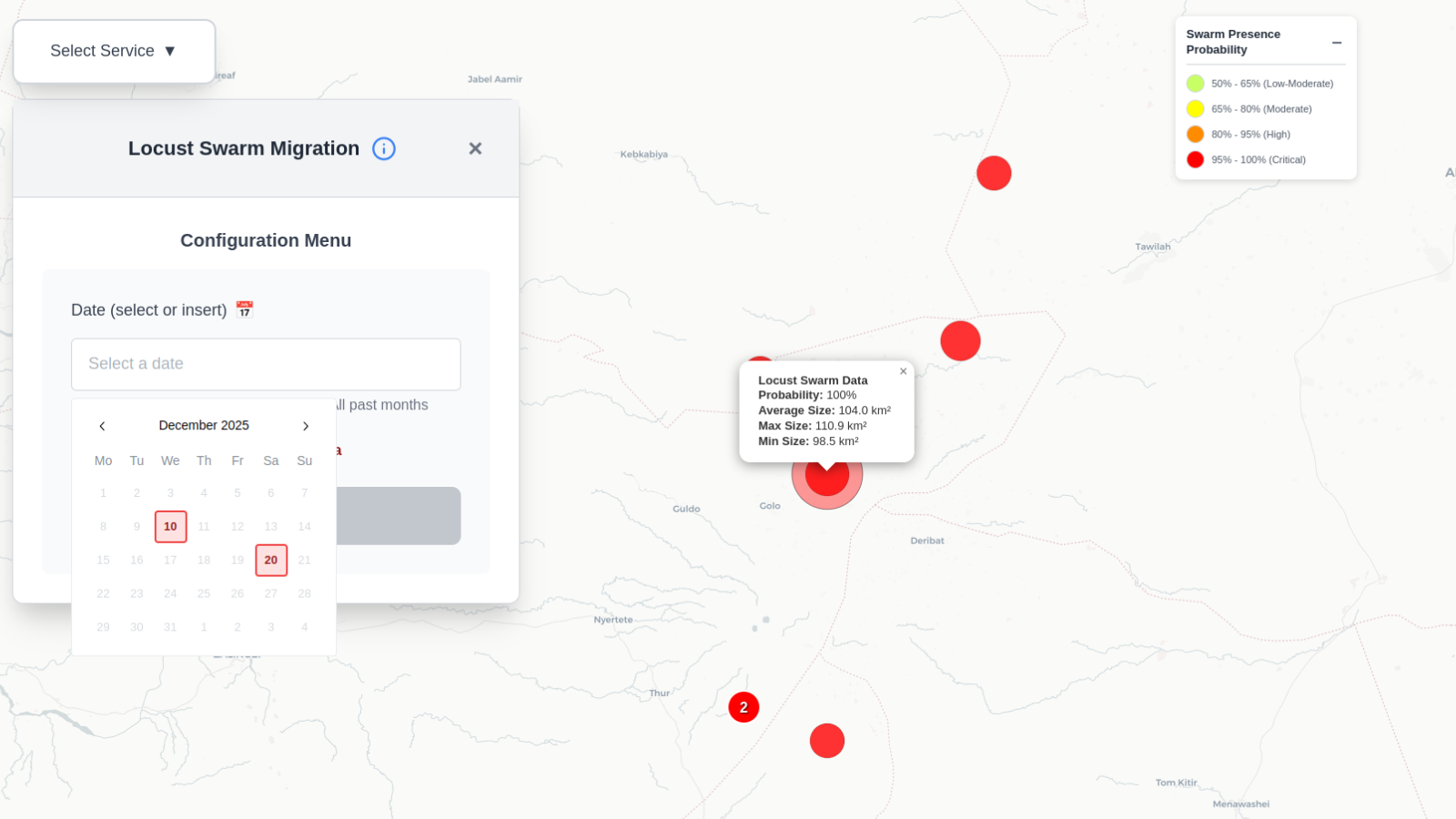
Desert locusts are known as the world’s most destructive migratory pest, and can cause major impacts to the economy, quality of life and the environment. Climate change is amplifying the occurrence of such pests. The Desert Locust Monitoring Service helps prevent locust upsurges by using advanced AI techniques and climate data from different data sources, ranging from satellites data, model data, to in situ data, to identify areas with favorable environmental conditions for locust breeding, and predict locust swarms migration patterns. The region of interest spans from Africa to Asia.
Desert Locust Monitoring Service
Desert locusts are among the most destructive migratory pests, with impacts worsened by climate change. The Desert Locust Monitoring Service uses AI and multi-source climate data to detect breeding conditions and predict swarm movements across Africa and Asia.
Operated by:
Funded by:


Video Tutorials
This tutorial introduces the Desert Locust Monitoring Service, a new early-warning system designed to prevent Desert Locust upsurges across Eastern Africa, Southwest Asia, and northwest India. Desert locusts are known as the world’s most destructive migratory pest, and can cause major impacts to the economy, quality of life and the environment. Climate change is amplifying the occurrence of such pests. Thanks to advanced AI techniques and climate data, you’ll learn about the most suitable ecosystem for desert locust breeding, and locust swarm migration across the region.
Similar Services
You might also like:
- Data Access Management, User Workflow
Upgraded Access
- Data Access Management